Explosive weapons have evolved significantly over time, becoming more precise, more destructive, and sadly, more accessible to non-state actors. One of the most feared and technically sophisticated improvised weapons is the EFP bomb, short for Explosively Formed Projectile. Often associated with roadside attacks and military conflicts, EFP bombs have gained global attention due to their ability to defeat armored vehicles and cause devastating casualties.
In this article, we’ll break down what an EFP bomb is, how it works, why it is so lethal, and where it has been used historically. We’ll also explore how it differs from other improvised explosive devices (IEDs), the challenges it poses to modern security forces, and why it remains a serious threat today.
What Is an EFP Bomb?
An EFP bomb (Explosively Formed Projectile bomb) is a type of improvised explosive device designed to fire a high-velocity metal projectile capable of penetrating armored vehicles and fortified targets. Unlike traditional bombs that rely mainly on blast and fragmentation, an EFP bomb uses focused explosive energy to transform a metal plate into a deadly projectile.
At its core, the weapon is engineered to concentrate force in a single direction, making it far more precise and penetrative than conventional explosives.
Key Characteristics of an EFP Bomb
- Uses a metal liner, usually copper
- Forms a solid projectile rather than random shrapnel
- Can penetrate thick armor and reinforced vehicles
- Often deployed as a roadside bomb
- Triggered remotely, by pressure plates, or timed detonators
Because of these features, EFP bombs are considered among the most dangerous types of IEDs used in asymmetric warfare.
How Does an EFP Bomb Work?
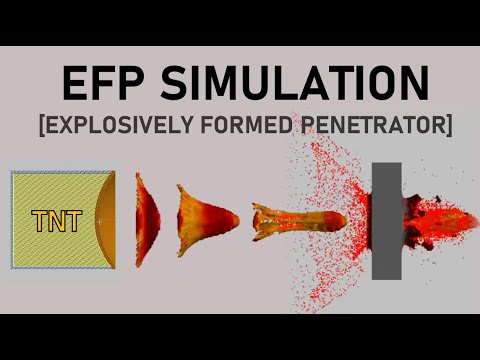
The effectiveness of an EFP bomb lies in its physics. When detonated, the explosive charge forces a concave metal liner to collapse inward and then forward, reshaping it into a high-speed projectile.
Step-by-Step Breakdown
- Explosive Detonation
The explosive material detonates from the rear of the device. - Metal Liner Collapse
The concave metal plate rapidly deforms under extreme pressure. - Projectile Formation
Instead of fragmenting, the metal forms a single, solid slug. - High-Velocity Launch
The projectile travels at several kilometers per second toward the target. - Armor Penetration
The projectile punches through armor using kinetic energy rather than blast force.
Unlike shaped charges that form a narrow jet, EFP bombs create a self-forging projectile that remains intact over longer distances, making them especially deadly against moving targets.
Why EFP Bombs Are So Lethal
The danger of an EFP bomb comes from a combination of precision, penetration, and surprise. Even heavily armored vehicles can be vulnerable when struck at the right angle.
What Makes Them Especially Deadly?
- Armor-piercing capability
EFP projectiles can penetrate several inches of steel. - Extended effective range
They remain lethal over longer distances than shaped charges. - Minimal warning
Often concealed along roadsides, giving targets little time to react. - Focused damage
Instead of dispersing energy, the force is concentrated on one point.
This combination makes EFP bombs particularly effective against military convoys, armored personnel carriers, and even some tanks.
EFP Bomb vs Other IEDs: What’s the Difference?
Not all IEDs are created equal. While many rely on blast pressure or fragmentation, EFP bombs are designed for precision penetration.
Comparison With Common IED Types
- Conventional IEDs
Rely on blast and scattered shrapnel to cause damage. - Shaped Charges
Use a focused jet of molten metal for penetration. - EFP Bombs
Fire a solid projectile that retains shape and energy.
Unlike typical roadside bombs that damage vehicles broadly, EFP bombs are purpose-built to kill occupants inside armored vehicles, making them far more effective against military targets.
Materials Commonly Used in EFP Bombs
EFP bombs are deceptively simple in construction, which adds to their danger. Many of the materials are commercially available or easily repurposed.
Typical Components Include
- Explosive charge (military-grade or homemade)
- Metal liner (commonly copper due to its malleability)
- Casing (steel or plastic container)
- Detonation system (remote control, pressure plate, or command wire)
- Power source (batteries or external triggers)
Copper is often chosen because it forms a stable projectile, but other metals like steel or tantalum may also be used depending on availability.
Historical Use of EFP Bombs
The EFP bomb gained widespread attention during modern conflicts, particularly in the Middle East.
Notable Conflicts and Incidents
- Iraq War
EFP bombs were frequently used against coalition forces, causing severe casualties. - Afghanistan
Insurgent groups adapted EFP designs for use against patrol vehicles. - Regional insurgencies
Variants have appeared in other conflict zones worldwide.
Their use marked a significant shift in insurgent tactics, demonstrating a higher level of technical sophistication.
Who Uses EFP Bombs?
EFP bombs are most commonly associated with non-state armed groups, insurgents, and terrorist organizations. However, the underlying technology is based on legitimate military research.
Typical Users Include
- Insurgent groups in asymmetric warfare
- Militant organizations targeting armored convoys
- Terrorist networks with access to technical expertise
Because EFP bombs require careful design and testing, their presence often signals external training or advanced engineering knowledge.
Legal and Ethical Implications of EFP Bomb Use
The use of EFP bombs raises serious legal and moral questions. These weapons are indiscriminate when deployed in civilian areas and often violate international humanitarian law.
Major Concerns
- High risk of civilian casualties
- Long-term unexploded ordnance hazards
- Difficulty in attribution and accountability
- Use in violation of the laws of armed conflict
In many cases, EFP bomb attacks have led to legal actions and anti-terrorism lawsuits, especially when civilians or contractors are harmed.
Countermeasures Against EFP Bombs
As EFP bombs evolved, so did the efforts to counter them. Military forces have invested heavily in protective technologies and detection methods.
Common Defensive Measures
- Up-armored vehicles with reinforced plating
- Electronic countermeasures to block remote detonation
- Route clearance teams using specialized equipment
- Intelligence-led operations to disrupt bomb-making networks
Despite these efforts, EFP bombs remain difficult to neutralize due to their concealment and lethality.
Why EFP Bombs Are Still a Threat Today
Even with modern surveillance and counter-IED strategies, EFP bombs continue to pose a serious danger. Their design can be adapted, improved, and concealed with alarming ease.
Ongoing Challenges
- Easy access to materials
- Transfer of knowledge through online networks
- Urban environments that favor concealment
- Rapid adaptation by hostile groups
As long as asymmetric conflicts persist, EFP bombs are likely to remain part of the threat landscape.
Read Also: Alina Amir Biography, Viral Fame, Controversy & Social Media Journey
Final Thoughts
The EFP bomb is one of the most dangerous and technically advanced improvised weapons ever used in modern conflict. Its ability to penetrate armor, target specific vehicles, and cause catastrophic damage makes it far more lethal than conventional roadside bombs.
Understanding how EFP bombs work, why they are used, and how they can be countered is essential not only for military and security professionals but also for policymakers and civilians seeking awareness of modern security threats. While technology continues to advance, the existence of weapons like the EFP bomb highlights the urgent need for global cooperation, intelligence sharing, and conflict prevention.